
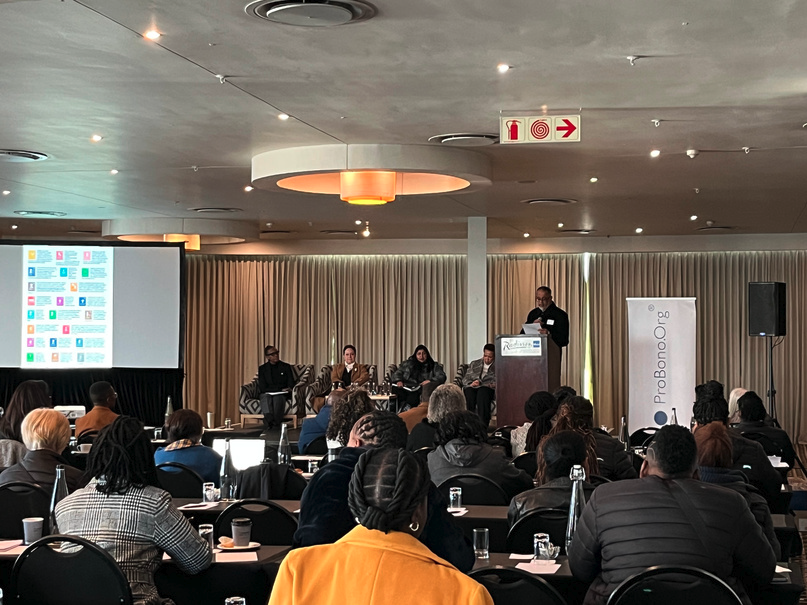
In commemoration of three decades since South Africa enshrined children’s rights in its democratic Constitution, ProBono.Org hosted a thought-provoking symposium on 11 June 2025. The symposium reflected on South Africa’s progress but also prompted action calling upon our collective duty to protect and promote children’s rights as South Africa commemorates 30 years since it ratified the United Nations Convention on the Rights of the child (UNCRC). The Symposium was attended by various stakeholders committed to the promotion and protection of children’s rights, including representatives from civil society organisations, government departments, the legal profession and child welfare agencies. The symposium was attended by 88 in person delegates, 329 participants online and 20 children who rendered a choral performance.
The keynote address was delivered by Ms Abigail Noko, Chairperson of the Southern African Office of the United Nations High Commissioner for Human Rights. We were truly humbled by the presence of our distinguished speakers: Madam Justice Linda Retief of the Gauteng Division, Pretoria, Advocate Nthabiseng Sepanya-Mogale, Chairperson of the Commission for Gender Equality and Ms Daphne Naidoo, Provincial Programme Head for Adoption and CYCC Service within the Directorate of the Department of Social Development.
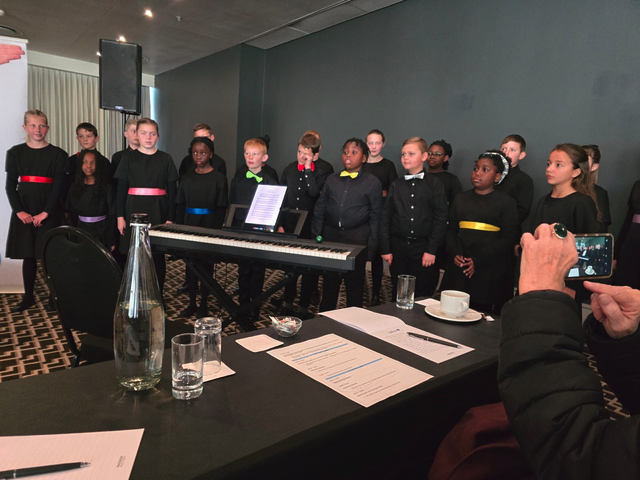
During the symposium, the speakers focused on the importance of the UN Convention on the Rights of the Child (UNCRC). The Convention was recognised as a foundational international instrument that sets out the civil, political, economic, social, and cultural rights of children. Its importance lies in providing a comprehensive framework for governments to ensure that the best interests of the child are prioritised in all matters affecting them. The symposium highlighted how the UNCRC guides policy development, legal reform, and service delivery to protect children’s rights globally and locally. The role of South African courts was acknowledged as playing a pivotal role in interpreting and enforcing children’s rights, as enshrined in the Constitution and in alignment with the UNCRC. The Gauteng Department of Social Development emphasised the Convention’s influence on provincial child protection policies and programmes. An example was their implementation of child protection campaigns aligned with Article 19 of the UNCRC, which focuses on protecting children from all forms of violence. They also highlighted the integration of UNCRC principles into foster care and early childhood development services.
The symposium also explored how children’s rights intersect with gender, noting that girls often face compounded vulnerabilities such as gender-based violence, early marriage, and barriers to education. It was stressed that a gender-sensitive approach is essential in promoting substantive equality and addressing systemic discrimination. The need for programmes that empower both boys and girl, challenge harmful gender norms, and promote gender justice within the framework of children’s rights was underscored.
As stated by our former president Nelson Mandela, “there can be no keener revelation of a society’s soul than the way in which it treats its children.”
We would like to express our gratitude to the Commission for Gender Equality for their support in making this symposium possible.


