

ProBono.Org in Cape Town hosted an event on 15 August 2025 in celebration of Women’s Month titled ‘An All-Women’s Assembly’. A panel was made up of a group of dynamic women in law who are all making an impactful difference in what remains a very patriarchal society. The topic of the day addressed ‘Access to Justice Through a Gendered Lens’ and made for riveting engagements amongst women at various stages of their careers, from emerging young professionals to seasoned experts.
The panel consisted of:
- Natasha Wagiet (ENSAfrica)
- Abigail Peters (Black Sash)
- Brigitta Mangale (Cliffe Decker Hofmeyer)
- Advocate Bernadine Bachar (Saartjie Baartman Centre for Women and Children)
These trailblazers in law highlighted the importance of ensuring that women feel safe and secure within the legal system through the prevention of re-traumatisation by the system. Advocate Bernadine Bachar, Director of the Saartjie Baartman Centre for Women and Children, highlighted the fact that women have tremendous power, especially once they decide to join forces in the fight against systemic oppression. Brigitta Mangale, Director of the pro bono department and human rights services at CDH, placed emphasis on the importance of always speaking out, confronting systematic barriers head on and encouraging women to speak out against injustices and violence committed against them.
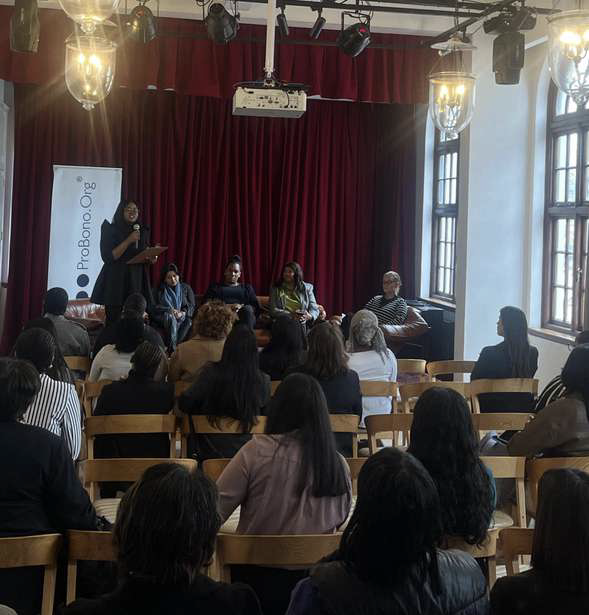
The question-and-answer session that followed the panel discussion offered profound insights. Ms. Bongiwe Adonis, Assistant Master of the Western Cape High Court, highlighted the emotional burden carried by female legal practitioners in South Africa. She spoke of the grieving mothers and wives who often approach her office, who must confront the daunting legal intricacies of administering a deceased estate alone. She emphasised that clients may not remember what was said or done, but they remember how officials in the system make them feel. This was a poignant moment and hit home for many legal professionals in the room as it highlighted the weight of what they do and how they can ensure that women are treated with care and compassion during difficult legal processes.
Former Magistrate, Pritima Osman, emphasised that ensuring women’s safety cannot be an individual struggle. While the Department of Justice is tasked with promulgating legislation to protect women, she stressed that various other departments, such as the South African Police Service, carry the responsibility of implementing these laws effectively. She stressed that all relevant departments must be held accountable, as meaningful change can only occur once they are actively engaged in finding solutions for the various barriers women face in South Africa.
The discussions and insights provided during this event reminded the attendees that the law does not only revolve around complicated legislation and difficult procedures, but also the people, their emotions and their lived realities. One thing remains certain: the pursuit of justice requires bravery and collective effort. Women in law can be agents for change as they know the struggles women face daily in South Africa. In the end, access to justice cannot be achieved through a one-size-fits-all approach. When we at look at access to justice through a gendered lens, we can clearly see the barriers women face, and the paths we are entrusted to carve out to overcome them.


