
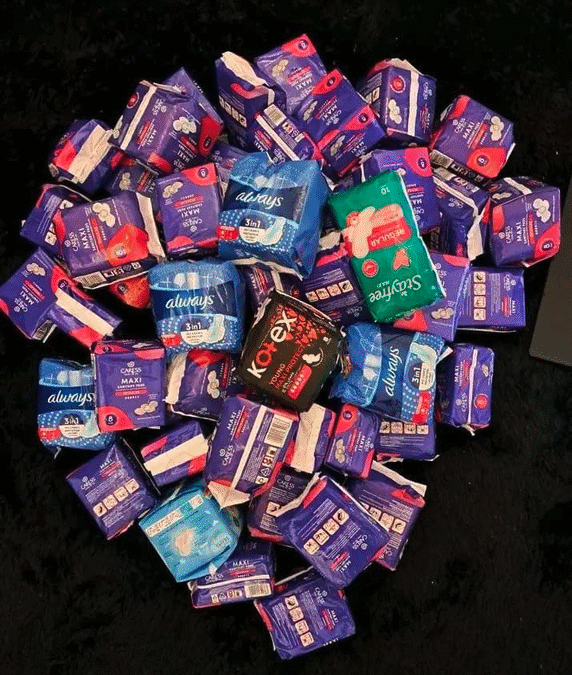
Menstruation has long been considered a taboo subject. It is one of those topics people often avoid, finding it distasteful or inappropriate to discuss openly. Yet, menstruation is a natural biological process experienced by almost all women who have reached maturity. The inability to access sanitary towels due to financial constraints places a heavy burden on women and girls. Menstruation directly impacts several constitutional rights, such as the right to human dignity, the right to access health care services (including reproductive health care) under Section 27 of the Constitution, and the right to equality as guaranteed under Section 9. This article critically analyses how free sanitary towels can be provided to vulnerable women in marginalised communities in modern-day South Africa.
Section 1 of the Constitution establishes that South Africa is founded on the values of “human dignity, the achievement of equality, and the advancement of human rights and freedoms”. Section 9 states that “Everyone is equal before the law and has the right to equal protection and benefit of the law.” Section 10 guarantees that “Everyone has inherent dignity and the right to have their dignity respected and protected.” Sections 27 (1)(a) and (c) provide that “Everyone has the right to have access to (a) health care services, including reproductive health care; and (c) social security, including, if they are unable to support themselves and their dependants, appropriate social assistance.”
In 1996, the late former President Nelson Rolihlahla Mandela stated, “As long as women are bound by poverty and as long as they are looked down upon, human rights will lack substance.” These words were spoken over 28 years ago, yet women’s rights remain partially unrealised, largely because access to free sanitary towels has not been included in legislation.
The Constitutional Court in S v Makwanyane emphasised that the right to dignity is one of the most important rights in the Bill of Rights, describing it as a right of intrinsic value. A person’s dignity is violated when they are subjected to degrading or humiliating circumstances. This is exactly what some women experience when they cannot afford basic sanitary products and are forced to use unsafe alternatives.
In National Coalition for Gay and Lesbian Equality v Minister of Justice, the court held that when considering the right to human dignity, it must be protected for all individuals, regardless of gender or sexual orientation. True equality can only be achieved in a society where all women have adequate access to menstrual products. The ability to practise good menstrual hygiene directly affects women’s rights to dignity and equality.
The National Health Act 61 of 2003 empowers the Minister of Health to introduce strategies to combat the spread of HIV/AIDS, including the provision of free condoms. The preamble of the Act highlights its purpose: “To provide a framework for a structured uniform health system within the Republic, taking into account the obligations imposed by the Constitution and other laws on the national, provincial and local governments with regard to health services.”
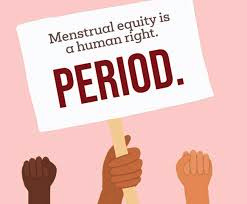
It was enacted in line with Section 27(1) of the Constitution to address “the socio-economic injustices, imbalances and inequities of health services of the past; the need to heal the divisions of the past and to establish a society based on democratic values, social justice and fundamental human rights; the need to improve the quality of life of all citizens and to free the potential of each person.”
It is important to acknowledge that black women were unfairly discriminated against on the basis of both gender and race during apartheid. In the modern South Africa, black women are again subjected to unequal treatment considering the fact that black communities are recognised as the poorest in South Africa, and black women form part of these communities, with some women not being able to afford basic sanitary towels which directly impacts their inability to live a dignified life. In or around 2019, organisations such as the #TeamFreeSanitaryPads movement began advocating for the government to provide free sanitary towels and menstrual health support. These organisations argued that the lack of basic sanitary products is a major factor hindering young girls from attending school.
In response, a parliamentary committee was formed to consider this issue. However, the committee noted that the main challenges to implementing free sanitary towel distribution were lack of funding and concerns about the quality of the products. They explained that the funds raised thus far were inadequate, making the programme difficult to sustain. As a result, many women and girls who cannot afford sanitary towels are forced to use items such as newspapers, grass, and cloth, which expose them to infections.
This article recognises the value of distributing free condoms to society, but it argues that women’s menstrual hygiene must be given equal importance. The government should allocate funding to a free sanitary towel initiative. Access to these basic items must be recognised as a human right that forms part of Section 27(1)(a) of the Constitution, and the National Health Act must be amended to include this provision. The amended law should specify that free sanitary towels will be provided to the most vulnerable women in society, which would ensure sustainable funding and targeted delivery.
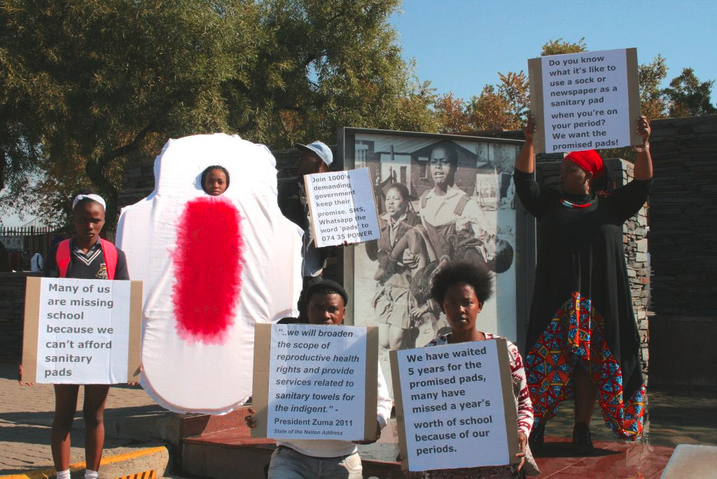
It is worth noting that, despite more than 30 years of democracy, South Africa remains one of the most unequal countries in the world. Thus, the provision of free sanitary products is an essential step toward realising true equality. While we wait for government implementation, those who can afford to help should make it a habit to buy a pack of sanitary towels when doing grocery shopping and donate them to vulnerable people in their communities.
Conclusion
In conclusion, menstrual hygiene is a critical human rights issue. The rights of women in South Africa remain partially unrealised because menstrual hygiene has not been recognised as a basic human right worthy of legislative protection. This article argues that access to free sanitary towels should be included under Section 27(1)(a) of the Constitution, and the government’s obligation to provide them must stem from Section 27(1)(c). The provision of condoms or sanitary towels must not be viewed as an “either or” issue because both are essential. However, there is a key difference: sexual activity is a choice, whereas menstruation is not. This makes the case for urgent government intervention in the provision of free or at least affordable sanitary towels.
“We are because we are“
“Umntu ngumntu ngabantu” Let us end menstrual period shame. It begins with us.


