

Human Rights Festival Activities – March 2026
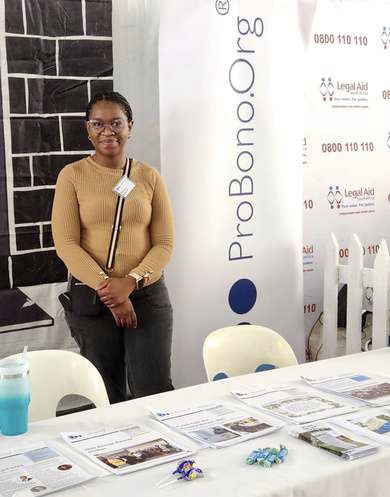
ProBono.Org stall at Activism Row
“Remembering the Past. Engaging the Present. Shaping a Just Future.”
In honour of Human Rights Day, each year in March, Constitution Hill hosts the Human Rights Festival to reflect on South Africa’s past and present. This year from 26 – 28 March, ProBono.Org was part of the Festival on Activism Row to create a space of dialogue, creativity, and activism.
Activism Row brings together Non-Governmental Organisations (NGOs) to provide opportunities to connect, learn, and get involved. Our stall provided an information space to encourage people, especially young people, to know about the work and impact of ProBono.Org and how they could get access to justice through our clearing house model.
The festival also included drumming, poetry, a kiddies section, film screenings, a book fair, panel discussions, a concert and We The People Walk.
Human Rights Day School’s Day Programme
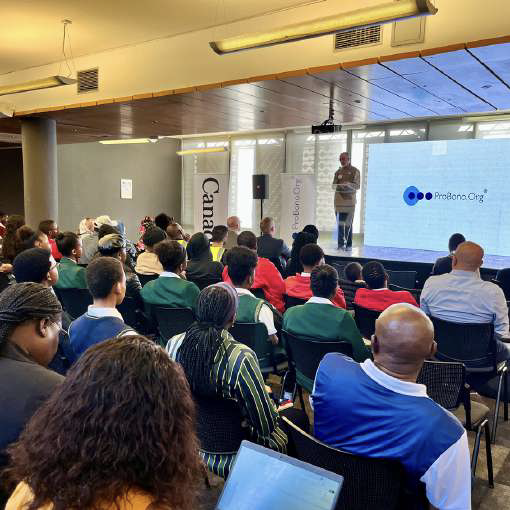
On 26 March, as part of the Human Rights Festival, ProBono.Org’s OCAY (One Child A Year) programme hosted a schools day programme to inform and engage with learners from various schools about their human rights and access to justice.
ProBono.Org’s OCAY programme achieves most of its goals through partnerships and this creates a network that raises both reach and effectiveness. This year, we were honoured to have the Canadian High Commissioner, Mr James Christoff, to give a keynote address on children’s rights.
Furthermore, the workshop included information by the Department of Social Development, The Department of Basic Education, The National Heritage Council, Gender Based Violence and Femicides Response Fund, Equal Education Law Centre, Lawyers for Human Rights, House of Ditsie, Gauteng Provincial Legislature, and Spiritual Chords to enhance collaborative advocacy which helps improve policies, reduce bureaucratic delays, and improve monitoring of child care facilities.
As a result of such collaborations, children’s cases are resolved faster and more comprehensively. The children’s legal, social, and emotional needs are considered and systemic change becomes possible through policy advocacy backed by legal expertise.


